1982
El Asceta
Width 13.50 in
Height 17.25 in
English
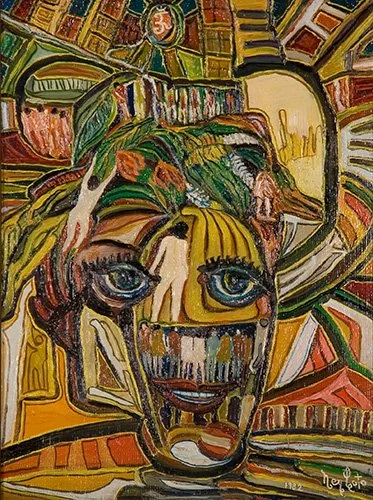
El Asceta (1982) is a meditation on inner withdrawal and the discipline of consciousness: on the way the human being turns inward in order to listen for what can only be perceived in silence. The central figure, gathered into a posture of almost ritual concentration, is not presented as an isolated individual but as a condensation of will, renunciation, and spiritual seeking. Its sober, suspended presence seems to inhabit a space where the substance of thought becomes visible.
The painted surface, worked with tactile density, functions as a record of this interior life: layers of pigment, glazes, and material tensions suggest accumulated time, introspection, and persistence. Color remains within a restrained range of earth tones, ochres, and deep values, reinforcing the atmosphere of recollection and poetic gravity. Nothing in the painting aims for immediate effect; everything seems built to endure in the gaze, like an image that reveals itself slowly. El Asceta invites the viewer to pause and contemplate the dignity of silence, understanding asceticism not as negation, but as a form of inner knowledge.
Espanol
El Asceta (1982) es una meditación sobre el retiro interior y la disciplina de la conciencia: sobre la forma en que el ser humano se repliega para escuchar aquello que sólo puede percibirse en silencio. La figura central, recogida en una postura de concentración casi ritual, no se presenta como un individuo aislado sino como una condensación de voluntad, renuncia y búsqueda espiritual. Su presencia, sobria y suspendida, parece habitar un espacio donde la materia del pensamiento se vuelve visible.
La superficie pictórica, trabajada con densidad táctil, funciona como un registro de esa vida interior: capas de pigmento, veladuras y tensiones matéricas sugieren tiempo acumulado, introspección y persistencia. El color se mantiene dentro de una gama contenida, de tierra, ocres y tonos profundos, reforzando el clima de recogimiento y gravedad poética. Nada en la pintura busca el efecto inmediato; todo parece construido para durar en la mirada, como una imagen que se revela lentamente. El Asceta invita al espectador a detenerse y contemplar la dignidad del silencio, entendiendo la ascética no como negación, sino como una forma de conocimiento interior.