1990
Psiquis
Width 10.75 in
Height 14.50 in
English
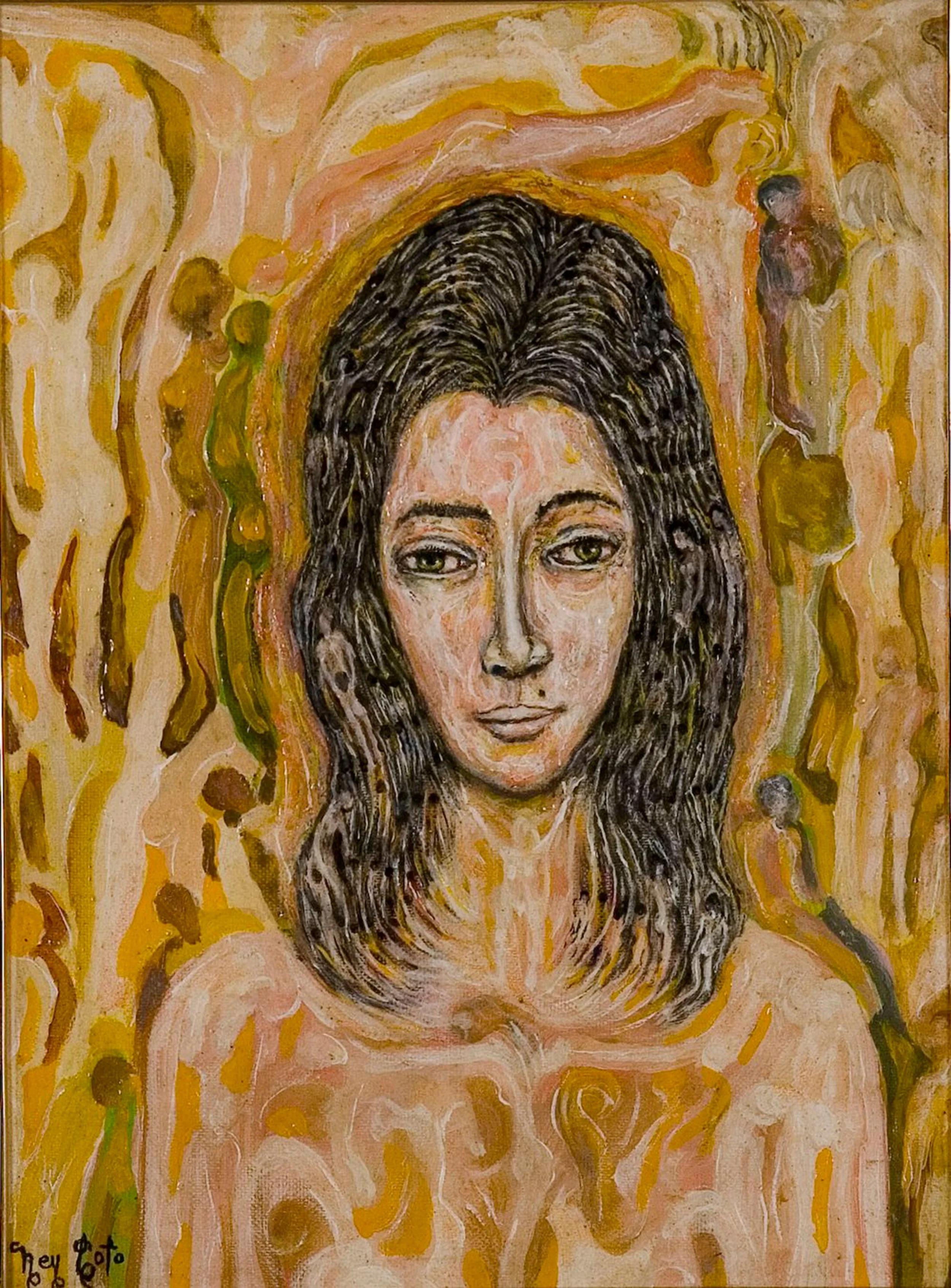
Psiquis (1990) is a meditation on inner consciousness and the fragile architecture of the psyche as a living, poetic space. The work seems to emerge from a realm where thought, emotion, and memory overlap, forming an atmosphere that is at once intimate and metaphysical. Rather than describing the mind in a literal way, the painting gives it form as presence: a terrain of inward movement, suspended feeling, and quiet self-revelation. The title suggests not only the psyche, but the depth, mystery, and vulnerability that accompany the act of looking within.
The composition appears to hold its figures and spaces in a state of psychological tension and reflection. Forms are not fixed in a narrative sense; instead, they seem to drift between recognition and dissolution, as if consciousness itself were being translated into image. This creates a sense of inward drama without spectacle — a kind of emotional stillness charged with movement beneath the surface. In Psiquis, the visible world becomes a vessel for unseen states: contemplation, fracture, longing, and the persistent search for coherence.
The surface, built through layered pigment and tactile density, strengthens this sense of interior depth. Earth tones, deep blues, muted violets, and restrained accents of light establish a chromatic field that feels both somber and luminous, grounded and introspective. The painting breathes with psychological gravity, allowing each layer to feel remembered rather than simply applied. In Psiquis, the psyche is not portrayed as a closed system, but as an open field of feeling and perception — a place where the hidden life of the self becomes visible through atmosphere, texture, and silence.
Espanol
Psiquis (1990) es una meditación sobre la conciencia interior y la frágil arquitectura de la psique como un espacio vivo y poético. La obra parece surgir de un ámbito donde pensamiento, emoción y memoria se superponen, formando una atmósfera a la vez íntima y metafísica. Más que describir la mente de manera literal, la pintura le da forma como presencia: un territorio de movimiento interior, sentimiento suspendido y silenciosa revelación de sí. El título sugiere no solo la psique, sino también la profundidad, el misterio y la vulnerabilidad que acompañan el acto de mirar hacia adentro.
La composición parece sostener sus figuras y espacios en un estado de tensión y reflexión psicológica. Las formas no están fijadas en sentido narrativo; más bien, parecen oscilar entre el reconocimiento y la disolución, como si la conciencia misma estuviera siendo traducida en imagen. Esto crea un drama interior sin espectáculo: una quietud emocional cargada de movimiento bajo la superficie. En Psiquis, el mundo visible se convierte en receptáculo de estados invisibles: contemplación, fractura, anhelo y la búsqueda persistente de coherencia.
La superficie, construida mediante pigmento en capas y una densidad táctil, refuerza esa sensación de profundidad interior. Los tonos tierra, los azules profundos, los violetas apagados y los acentos contenidos de luz establecen un campo cromático que se siente a la vez sombrío y luminoso, terrenal e introspectivo. La pintura respira con gravedad psicológica, permitiendo que cada capa se perciba como algo recordado más que simplemente aplicado. En Psiquis, la psique no se presenta como un sistema cerrado, sino como un campo abierto de sentimiento y percepción: un lugar donde la vida oculta del yo se vuelve visible a través de la atmósfera, la textura y el silencio.