1995
Mujer Romantica
Width 9.5 in
Height 13.50 in
Oil
$4,000
English
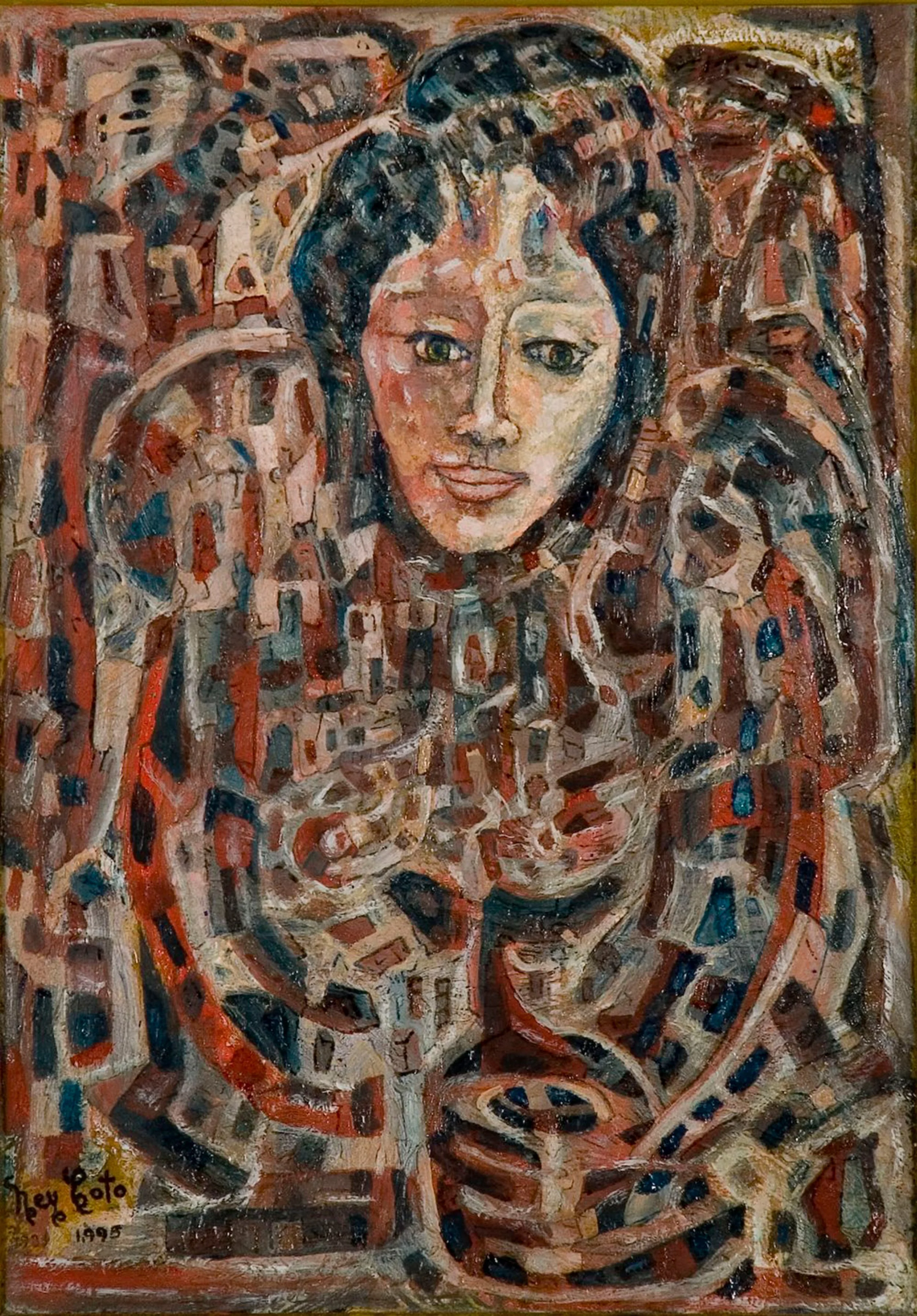
Mujer Romántica (1995) is a meditation on feminine presence as something inward, luminous, and quietly self-possessed. The work does not present romance as sentimentality, but as a deeper state of emotional gravity — a condition in which tenderness, memory, and inner life gather into a single, contemplative figure. The woman appears less as a portrait in the conventional sense than as an atmosphere of feeling, where gesture, posture, and surface together suggest a personality shaped by reflection, vulnerability, and restrained strength.
The composition seems to emerge from a space where the figure is both seen and withheld, allowing the painting to retain an air of intimacy and mystery. Rather than declaring itself outwardly, the work holds its emotional charge within the subtleties of expression, the tension of the form, and the layered material presence of the surface. This gives the painting a poetic quietness: one senses that what is most important is not narrated directly, but preserved in the atmosphere around the figure. The result is a work that feels less like an illustration of romance than a visual meditation on longing, dignity, and the interior poise of the feminine.
Earth tones, softened shadows, and deep tonal passages help establish a climate of warmth tempered by introspection. The painting feels grounded in human tenderness, yet elevated by a sense of emotional refinement. In Mujer Romántica, romance becomes not an ornament, but a way of being — a mode of presence marked by sensitivity, inwardness, and grace. The work invites the viewer to linger with it patiently, until the figure begins to reveal not only beauty, but inner life.
Espanol
Mujer Romántica (1995) es una meditación sobre la presencia femenina entendida como algo íntimo, luminoso y serenamente dueño de sí mismo. La obra no presenta el romanticismo como sentimentalismo, sino como un estado más profundo de gravedad emocional: una condición en la que la ternura, la memoria y la vida interior convergen en una única figura contemplativa. La mujer aparece menos como un retrato en el sentido convencional que como una atmósfera de sentimiento, donde el gesto, la postura y la superficie sugieren, en conjunto, una personalidad moldeada por la reflexión, la vulnerabilidad y una fortaleza contenida.
La composición parece surgir de un espacio en el que la figura se muestra y, al mismo tiempo, se reserva, permitiendo que la pintura conserve un aire de intimidad y misterio. En lugar de manifestarse abiertamente, la obra mantiene su carga emocional en los matices de la expresión, la tensión de la forma y la presencia material de la superficie, construida a través de múltiples capas. Esto confiere a la pintura una quietud poética: se percibe que lo más importante no se narra de manera directa, sino que permanece resguardado en la atmósfera que envuelve a la figura. El resultado es una obra que se siente menos como una ilustración del romanticismo que como una meditación visual sobre el anhelo, la dignidad y el equilibrio interior de lo femenino.
Los tonos terrosos, las sombras suavizadas y los pasajes tonales profundos contribuyen a establecer una atmósfera de calidez matizada por la introspección. La pintura se siente arraigada en la ternura humana, pero, al mismo tiempo, se eleva gracias a una sensación de refinamiento emocional. En Mujer Romántica, el romanticismo se convierte no en un ornamento, sino en una forma de ser: un modo de presencia marcado por la sensibilidad, la interioridad y la gracia. La obra invita al espectador a detenerse ante ella con paciencia, hasta que la figura comienza a revelar no solo su belleza, sino también su mundo interior...