1996
Los Humildes
Width 11.00 in
Height 15.75 in
Acrylic
$4,700
English
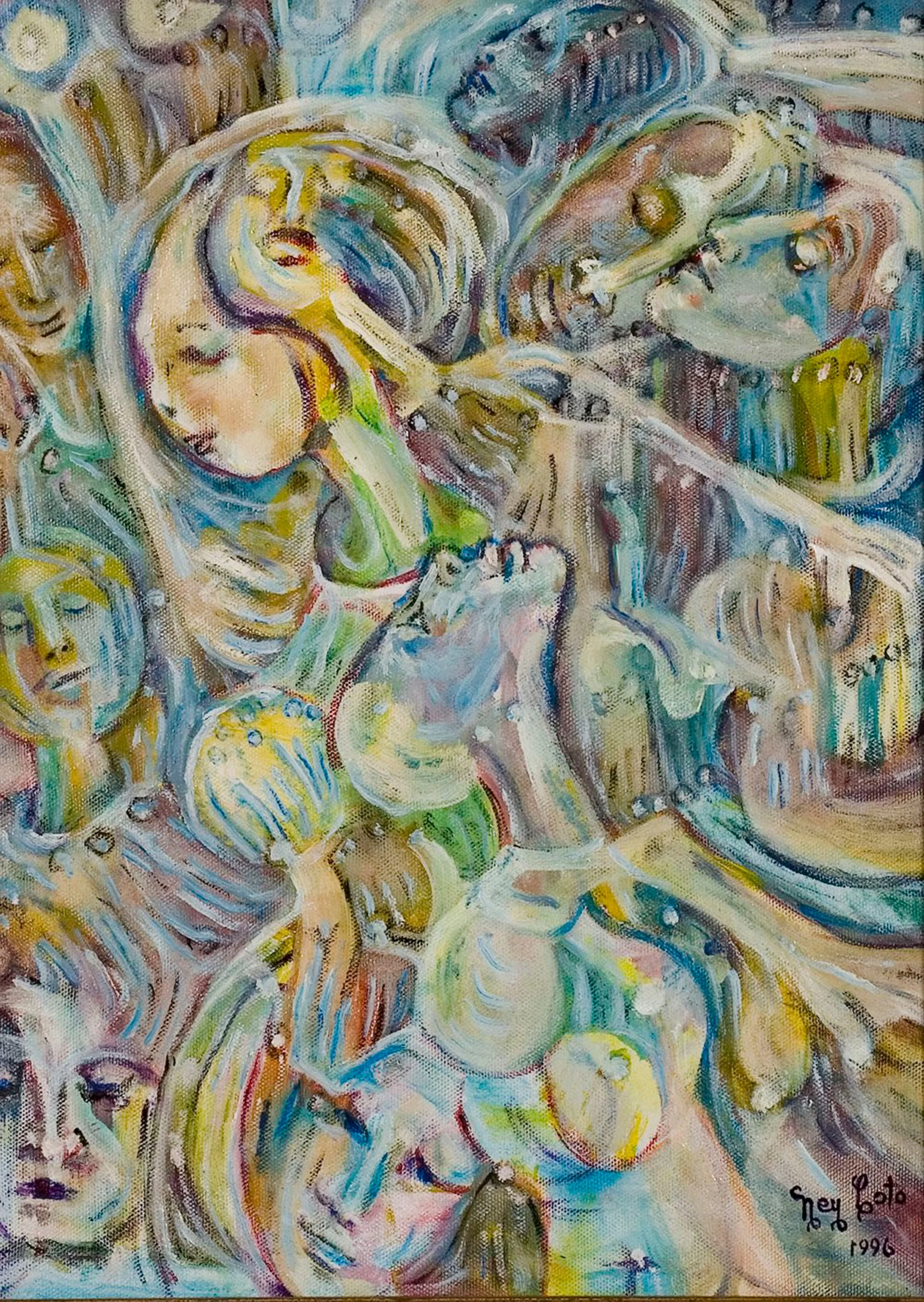
Los Humildes (1996) is a meditation on dignity, collective presence, and the quiet moral force of those who do not seek visibility but carry the weight of lived experience with endurance. The work seems to emerge from a space of humble witness, where figures gathered in stillness or proximity become more than individuals: they appear as a shared human condition, marked by restraint, perseverance, and inward strength. Rather than dramatizing poverty, struggle, or modesty as subject matter, the painting elevates humility into a spiritual and emotional register, allowing it to feel expansive rather than diminished.
The composition appears to be held together by balance and continuity rather than spectacle. Forms are likely gathered in a way that emphasizes relation over hierarchy, presence over display. This gives the painting a contemplative rhythm, as though what matters most is not a single gesture, but the atmosphere created when people exist together in a state of quiet solidarity. The surface, with its layered materiality, may function as a visual record of that accumulated life — memory, labor, and mutual recognition pressed into pigment and form. The result is a work that feels grounded in humanity, yet elevated by a sense of reverence.
Earth tones, muted blues, and sober accents help establish an atmosphere of grace without ornament. These colors reinforce the painting’s emotional honesty, giving it both warmth and gravity. In Los Humildes, humility is not weakness; it is a form of presence that resists vanity and speaks through character rather than declaration. The work invites the viewer to slow down, to look carefully, and to recognize the quiet nobility that can reside in ordinary lives when they are seen with attention and respect.
Español
Los Humildes (1996) es una meditación sobre la dignidad, la presencia colectiva y la fuerza moral silenciosa de quienes no buscan ser vistos, pero cargan con el peso de la experiencia vivida con entereza. La obra parece surgir de un espacio de testimonio humilde, donde las figuras reunidas en quietud o cercanía se vuelven más que individuos: aparecen como una condición humana compartida, marcada por la contención, la perseverancia y la fuerza interior. En vez de dramatizar la pobreza, la lucha o la modestia como tema, la pintura eleva la humildad a un registro espiritual y emocional, permitiendo que se sienta amplia en lugar de disminuida.
La composición parece sostenerse por el equilibrio y la continuidad más que por el espectáculo. Las formas probablemente se reúnen de manera que enfatizan la relación por encima de la jerarquía, la presencia por encima de la exhibición. Esto le da a la pintura un ritmo contemplativo, como si lo más importante no fuera un gesto aislado, sino la atmósfera que se crea cuando las personas coexisten en un estado de solidaridad silenciosa. La superficie, con su materialidad estratificada, puede funcionar como un registro visual de esa vida acumulada — memoria, trabajo y reconocimiento mutuo prensados en pigmento y forma. El resultado es una obra arraigada en lo humano, pero elevada por una sensación de reverencia.
Los tonos tierra, los azules apagados y los acentos sobrios ayudan a construir una atmósfera de gracia sin ornamento. Estos colores refuerzan la honestidad emocional de la pintura, otorgándole calidez y gravedad a la vez. En Los Humildes, la humildad no es debilidad; es una forma de presencia que resiste la vanidad y habla a través del carácter más que de la afirmación. La obra invita al espectador a desacelerar, mirar con atención y reconocer la nobleza silenciosa que puede habitar en las vidas ordinarias cuando son observadas con respeto y profundidad.