1996
De Profundis
Width 9.50 in
Height 12.50 in
English
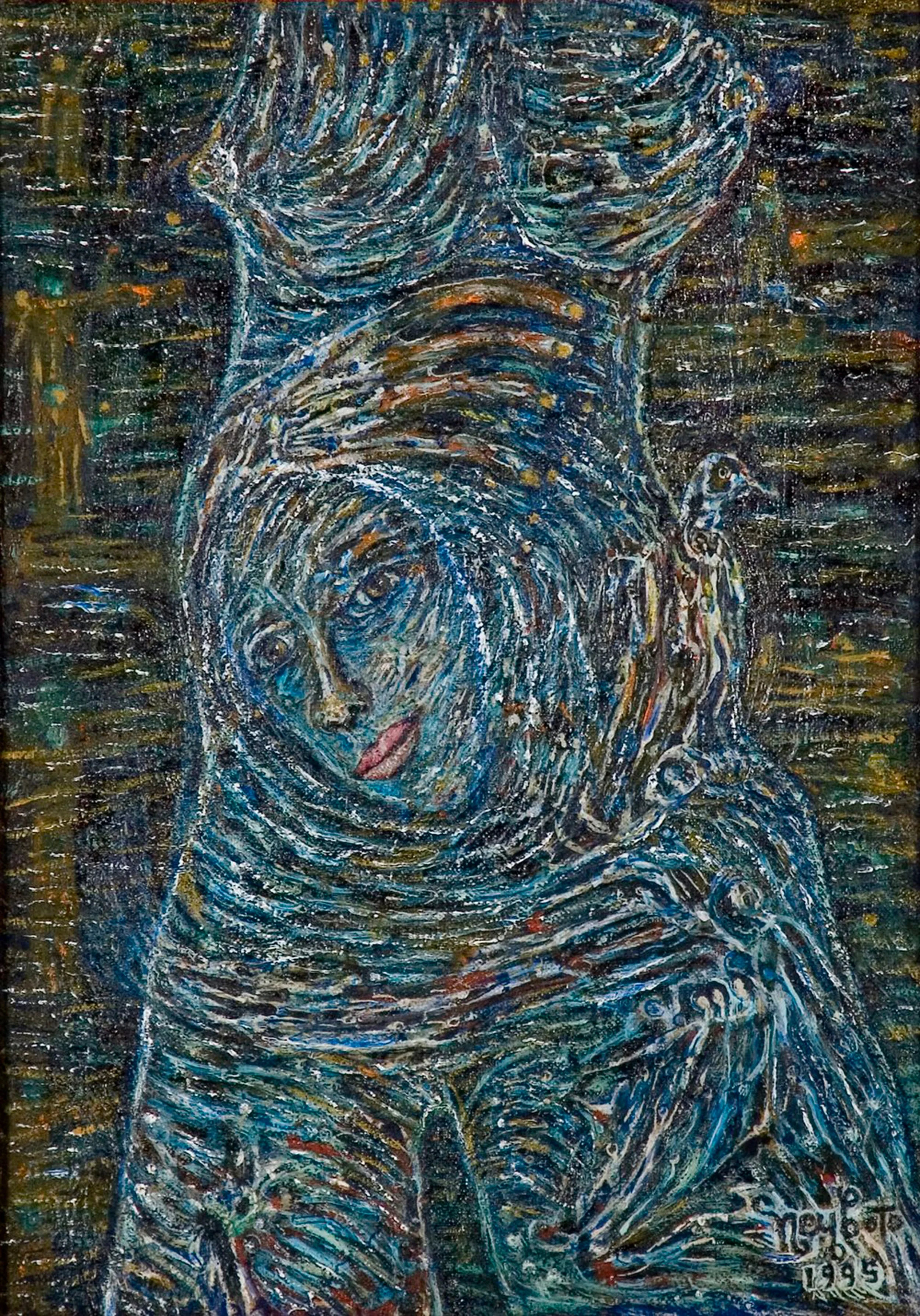
De Profundis 2 (1996) is a meditation on descent, inward reckoning, and the emotional depth that emerges when the surface of experience is crossed and the interior is reached. The title itself evokes a movement from the outer world toward something more hidden, more essential, and more burdened with feeling. The work seems to arise from a space of gravity and introspection, where the human condition is not described through narrative but through atmosphere: a sense of looking inward after loss, silence, or profound contemplation. Rather than offering resolution, the painting holds the viewer within a state of suspended reflection.
What gives the work its force is its sense of psychological depth. The composition appears to gather its energy from layers of presence and concealment, as though meaning were being excavated rather than simply displayed. The surface, marked by accumulated pigment and material sensitivity, becomes a kind of emotional terrain — one in which memory, suffering, and spiritual searching are held together. In this way, the painting does not dramatize despair; instead, it transforms depth into a form of visual language, allowing what lies below to become visible without ever becoming fully exposed.
Earth tones, deep blues, and muted tonal passages create a solemn and contemplative atmosphere. These colors reinforce the work’s inward movement, giving it a quiet resonance that feels at once intimate and expansive. In De Profundis 2, descent is not only an image of burden, but also a way of accessing truth: a passage into the depths where feeling, memory, and inner life become inseparable. The painting invites the viewer to remain in that space long enough to sense that the profound is often not loud, but weighty, patient, and quietly transformative.
Espanol
De Profundis 2 (1996) es una meditación sobre el descenso, la revisión interior y la profundidad emocional que emerge cuando se atraviesa la superficie de la experiencia y se alcanza lo íntimo. El título mismo evoca un movimiento desde el mundo exterior hacia algo más oculto, más esencial y más cargado de sentimiento. La obra parece surgir de un espacio de gravedad e introspección, donde la condición humana no se describe mediante narración, sino a través de la atmósfera: una sensación de mirar hacia adentro después de la pérdida, del silencio o de una contemplación profunda. Más que ofrecer resolución, la pintura mantiene al espectador dentro de un estado de reflexión suspendida.
Lo que le da fuerza a la obra es su densidad psicológica. La composición parece reunir su energía a partir de capas de presencia y ocultamiento, como si el significado estuviera siendo excavado y no simplemente mostrado. La superficie, marcada por pigmentos acumulados y una sensibilidad material, se vuelve una especie de territorio emocional — un espacio donde memoria, sufrimiento y búsqueda espiritual permanecen entrelazados. De este modo, la pintura no dramatiza la desesperación; más bien transforma la profundidad en un lenguaje visual, permitiendo que aquello que yace debajo se vuelva visible sin llegar jamás a quedar completamente expuesto.
Los tonos tierra, los azules profundos y los pasajes tonales apagados construyen una atmósfera solemne y contemplativa. Estos colores refuerzan el movimiento interior de la obra, otorgándole una resonancia silenciosa que se siente a la vez íntima y expansiva. En De Profundis 2, el descenso no es solo una imagen de carga, sino también una vía de acceso a la verdad: un pasaje hacia las profundidades donde sentimiento, memoria y vida interior se vuelven inseparables. La pintura invita al espectador a permanecer en ese espacio el tiempo suficiente para percibir que lo profundo muchas veces no es ruidoso, sino denso, paciente y silenciosamente transformador.