1996
Piedad
Width 40.0 in
Height 30.0 in
English
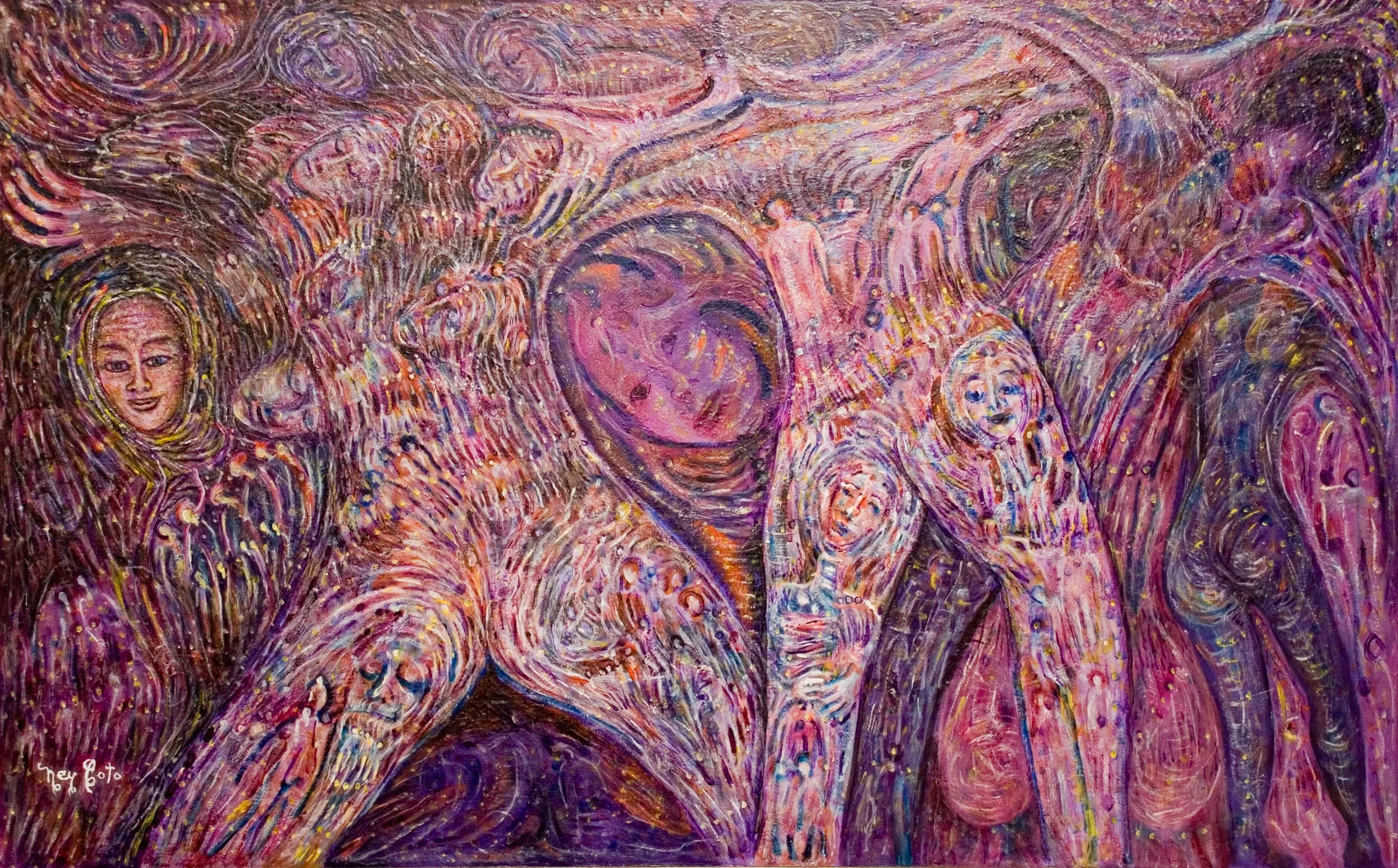
Piedad (1996) is a meditation on compassion as an inward force, one that arises not from spectacle but from deep human recognition. The work seems to emerge from a quiet moral and emotional space, where tenderness, suffering, and empathy gather into a single contemplative presence. Rather than illustrating piety in a religiously literal sense, the painting opens onto a broader understanding of mercy — as something felt in the body, carried in the gaze, and held in the act of remaining with what is wounded or vulnerable. The figure or figures appear suspended in an atmosphere of reverence, as though the painting is less concerned with narrating action than with preserving a state of soulful attentiveness.
The composition appears shaped by restraint and emotional density. Forms are not excessive or theatrical; instead, they are held within a structure that allows feeling to register slowly, through accumulation and silence. This gives the work a devotional quality without sentimentality, as if compassion itself were being translated into visual form through balance, weight, and the quiet pressure of the surface. The layered material presence suggests memory and human fragility, making the painting feel both intimate and enduring. What is seen is not only an image, but an ethical atmosphere — one in which care becomes visible.
Earth tones, subdued blues, and softened tonal contrasts help establish a climate of solemn warmth. These colors reinforce the work’s gravity while preventing it from becoming harsh or distant. In Piedad, compassion is not weakness, but a profound form of strength: a way of standing before human pain without turning away. The painting invites the viewer to pause, to look with patience, and to recognize that mercy is often quiet, but no less powerful for being so.
Español
Piedad (1996) es una meditación sobre la compasión como fuerza interior, una que no surge del espectáculo sino del reconocimiento humano más profundo. La obra parece emerger de un espacio moral y emocional silencioso, donde la ternura, el sufrimiento y la empatía se reúnen en una sola presencia contemplativa. Más que ilustrar la piedad en un sentido religioso literal, la pintura se abre a una comprensión más amplia de la misericordia — como algo que se siente en el cuerpo, se lleva en la mirada y se sostiene en el acto de permanecer junto a lo herido o vulnerable. La figura o las figuras aparecen suspendidas en una atmósfera de reverencia, como si la pintura estuviera menos interesada en narrar una acción que en preservar un estado de atención del alma.
La composición parece construirse desde la contención y la densidad emocional. Las formas no son excesivas ni teatrales; más bien, se mantienen dentro de una estructura que permite que el sentimiento se perciba lentamente, a través de la acumulación y el silencio. Esto le da a la obra una cualidad devocional sin caer en el sentimentalismo, como si la compasión misma estuviera siendo traducida al lenguaje visual mediante el equilibrio, el peso y la presión silenciosa de la superficie. La presencia material en capas sugiere memoria y fragilidad humana, haciendo que la pintura se sienta a la vez íntima y perdurable. Lo que se ve no es solo una imagen, sino una atmósfera ética — un espacio donde el cuidado se vuelve visible.
Los tonos tierra, los azules sobrios y los contrastes suavizados ayudan a crear un clima de calidez solemne. Estos colores refuerzan la gravedad de la obra sin volverla dura ni distante. En Piedad, la compasión no es debilidad, sino una forma profunda de fortaleza: una manera de sostenerse frente al dolor humano sin apartar la mirada. La pintura invita al espectador a detenerse, a mirar con paciencia y a reconocer que la misericordia suele ser silenciosa, pero no por eso menos poderosa.